Program
Workshop date: Saturday, December 12, 2026. Room MR C2.5 & C2.6, Sydney.
All times are local to Sydney. The program is tentative and subject to change.
NeurIPS will provide coffee, tea, and snacks from 08:00 – 09:30 and 15:00 – 15:30.
| Time | Session |
|---|---|
| 08:30 – 08:45 | Opening remarks |
| 08:45 – 09:15 | Invited talk 1 |
| 09:15 – 09:45 | Invited talk 2 |
| 09:45 – 10:00 | Oral presentation |
| 10:00 – 10:30 | Break and poster setup |
| 10:30 – 11:00 | Invited talk 3 |
| 11:00 – 11:15 | Oral presentation |
| 11:15 – 12:00 | Poster session, part 1 |
| 12:00 – 13:00 | Sponsored network lunch + Invited talk 4 |
| 13:00 – 13:45 | Panel: What would it take for AI models to enter a power grid control room? |
| 13:45 – 14:00 | Oral presentation |
| 14:00 – 14:30 | Invited talk 5 |
| 14:30 – 15:00 | Invited talk 6 |
| 15:00 – 15:30 | Coffee break and poster session, part 2 |
| 15:30 – 16:00 | Invited talk 7 |
| 16:00 – 16:30 | Invited talk 8 |
| 16:30 – 16:45 | Oral presentation |
| 16:45 – 17:00 | Closing remarks and best-paper announcement |
Durations: invited talks 25 min + 5 min Q&A · orals 15 min (Q&A during the poster sessions) · panel 30 min + 15 min Q&A
All accepted papers are on display during both poster sessions.
Invited speakers
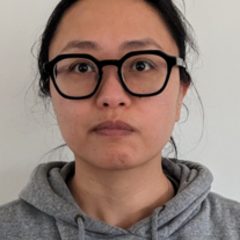
Weiwei Yang
Asemic.ai; formerly Microsoft Research
From GridSFM to Asemic-1: Foundation Models for Feasible Grid Decisions
Weiwei is the co-founder of Asemic.ai, where she builds foundation models for engineered systems to power civilization, starting with the electric grid. Previously, as a senior director at Microsoft Research, she led the development and open-source release of GridSFM, a foundation model that generalized across diverse power-grid topologies. That work reflects her broader focus at the intersection of AI, physics, and critical infrastructure: creating models that capture the structure and constraints of real engineering systems. At Asemic, she is turning this vision into practical technology that makes the infrastructure society depends on faster, more adaptive, and more resilient under pressure.

Bernardo Costa
School of Applied Mathematics, Getulio Vargas Foundation (FGV EMAp)
Can we detect multistage strategies in the Energy market?
Bernardo Costa is a professor of mathematics at the School of Applied Mathematics, Getulio Vargas Foundation (FGV), Brazil. His current research focuses on convex optimization, though he also worked with complex analysis and stochastic processes. He is particularly interested in multistage stochastic optimization and applications to the energy sector, having collaborated for 10 years with the Brazilian ISO in several research projects including modeling and algorithms for efficient operations planning.
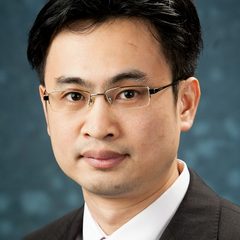
Minghua Chen
The Chinese University of Hong Kong (Shenzhen) and City University of Hong Kong
Machine Learning for Optimal Power Flow: Beyond Soft Penalties to Hard Constraint Guarantees
Minghua received his B.Eng. and M.S. degrees from Tsinghua University and his Ph.D. in Electrical Engineering and Computer Sciences from UC Berkeley. He is currently a Presidential Chair Professor at the School of Data Science, The Chinese University of Hong Kong, Shenzhen. His research interests include machine learning for optimization, online algorithms, power system operation, intelligent transportation, and distributed optimization. He has received a number of awards and recognition, including the UC Berkeley Eli Jury Award, and best paper awards from IEEE Transactions on Multimedia, ACM Multimedia, ACM e-Energy, and Nature Communications Editors' Highlights. He currently serves as the Award Chair of ACM SIGEnergy, and TPC Area/Track Chair of ACM e-Energy, IEEE INFOCOM, and NeurIPS. He is a Fellow of the IEEE.
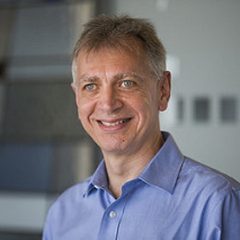
Pascal Van Hentenryck
Georgia Tech and Gurobi Optimization
Reliable AI for Power Systems Optimization
Pascal Van Hentenryck is the A. Russell Chandler III Chair and Professor in ISyE at Georgia Tech, the director of the US National Science Foundation (NSF) AI Institute for Advances in Optimization (AI4OPT), and the head of the AI Innovation lab at Gurobi Optimization. He was a professor of Computer Science at Brown University for over 20 years and led the optimization research group at National ICT Australia. Van Hentenryck is a pioneer of constraint programming, and designed several optimization systems that have been in commercial use for over 20 years. He has published 6 books and over 400 articles. He is a fellow of AAAI and INFORMS, and the recipient of two honorary degrees and numerous awards. His current research focuses on fusing AI and optimization for engineering with primary applications in energy systems, supply chains, manufacturing, and health care.
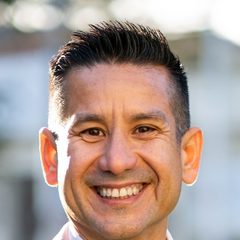
Nando Ochoa
University of Melbourne, Australia
Learning Where No Electrical Model Exists: Voltage Calculations from Real Smart Meter Data
Luis (Nando) Ochoa is a Professor of Smart Grids and Power Systems at The University of Melbourne. His research focuses on electricity distribution networks, particularly the integration of distributed energy resources and the use of data-driven and AI techniques in low voltage networks, where electrical models are often poor or missing altogether. Working with Australian distribution companies, his team has developed electrical model-free approaches that calculate voltages and operating envelopes directly from real smart meter measurements. He is an IEEE PES Distinguished Lecturer and previously held academic roles at the University of Manchester and the University of Edinburgh.
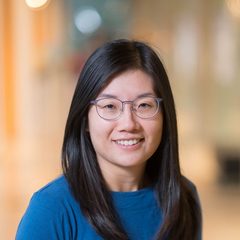
Christine Chen
The University of British Columbia
AI for control and operation of modern power grids: opportunities and challenges
Christine Chen is an Associate Professor with the Department of Electrical and Computer Engineering and an Associate Director of the Clean Energy Research Centre at The University of British Columbia. Her research interests include power system modelling, control, and operation. She received the B.A.Sc. degree in engineering science from the University of Toronto and the M.S. and Ph.D. degrees in electrical engineering from the University of Illinois at Urbana-Champaign. Her work has been recognized with a Best Paper Award from the IEEE Transactions on Energy Conversion, an IEEE Power and Energy Society Prize Paper Award, and a "Best of the Best" Prize Conference Paper Award at the IEEE Power and Energy Society General Meeting. Christine serves or has served on the editorial boards of the IEEE Transactions on Power Systems, the IEEE Transactions on Smart Grid, and the IEEE Transactions on Energy Conversion.

Hendrik Hamann
Stony Brook University and Brookhaven National Laboratory
Quo vadis - Grid Foundation Models
Dr. Hamann is the Chief AI Scientist at Brookhaven National Laboratory for Innovation, Science and Security and a Professor at Stony Brook University. Dr. Hamann spent two decades at IBM Research, most recently as Chief Science Officer for IBM Research at the T.J. Watson Research Center. His technical work centered on AI for science. He helped develop a new generation of AI foundation models, which are massive, physics-informed AI systems that learn from and emulate the complexity of natural and engineered environments. He now spearheads the development of AI foundation models for the electric grid, designed to improve resilience and accelerate grid modernization. Dr. Hamann, a Fellow of the American Physical Society, authored over 260 scientific papers and holds more than 180 patents. His contributions have earned him honors, including the American Institute of Physics Prize for Industrial Applications of Physics and the Cozzarelli Prize of the National Academy of Sciences.

Luis Piloto
Google DeepMind
Accelerating Power System Optimization with Machine Learning
Luis Piloto is a Staff Research Scientist at Google DeepMind focusing on machine learning for power grid optimization. He has a Ph.D. in neuroscience from Princeton, where he studied sleep and memory using neuroimaging as well as intuitive physics and developmental psychology using neural networks. Before that he received a Bachelor's degree in Cognitive Science and Computer Science at Rutgers University. Prior to that, he was a software developer in the travel industry.
Invited panelists
More panelists to be announced.
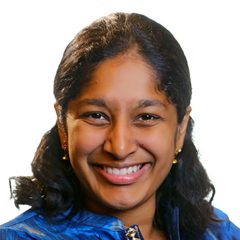
Priya Donti
MIT
Priya Donti is an Assistant Professor and the Silverman (1968) Family Career Development Professor at MIT EECS and LIDS. Her research focuses on safe and robust machine learning for high-renewables power grids. Priya is also a co-founder and Chair of Climate Change AI, a global nonprofit initiative to catalyze impactful work at the intersection of climate change and machine learning. She received her Ph.D. in Computer Science and Public Policy from Carnegie Mellon University. She was recognized in MIT Technology Review's 2021 list of 35 Innovators Under 35, Vox's 2023 Future Perfect 50, and the 2025 TIME100 AI list, and is a recipient of the Schmidt Sciences AI2050 Early Career Fellowship, the ACM SIGEnergy Doctoral Dissertation Award, and best paper honorable mentions at ICML and ACM e-Energy.

Arnaud Zinflou
Hydro-Québec
Arnaud Zinflou is a Principal Research Scientist at the Hydro-Québec Research Institute (IREQ), where he leads research and development activities in artificial intelligence for power systems and industrial applications. His work spans time-series forecasting, computer vision, representation learning, uncertainty quantification, and trustworthy AI. At Hydro-Québec, he contributes to the development and deployment of AI solutions supporting grid operations, asset management, infrastructure inspection, and decision support. His recent research focuses on foundation and world models for time series, self-supervised learning, and operationally reliable AI systems for critical infrastructure. He is the author or co-author of more than 50 scientific papers, 7 book chapters, and 3 patents, and has been an IEEE Senior Member since 2015.